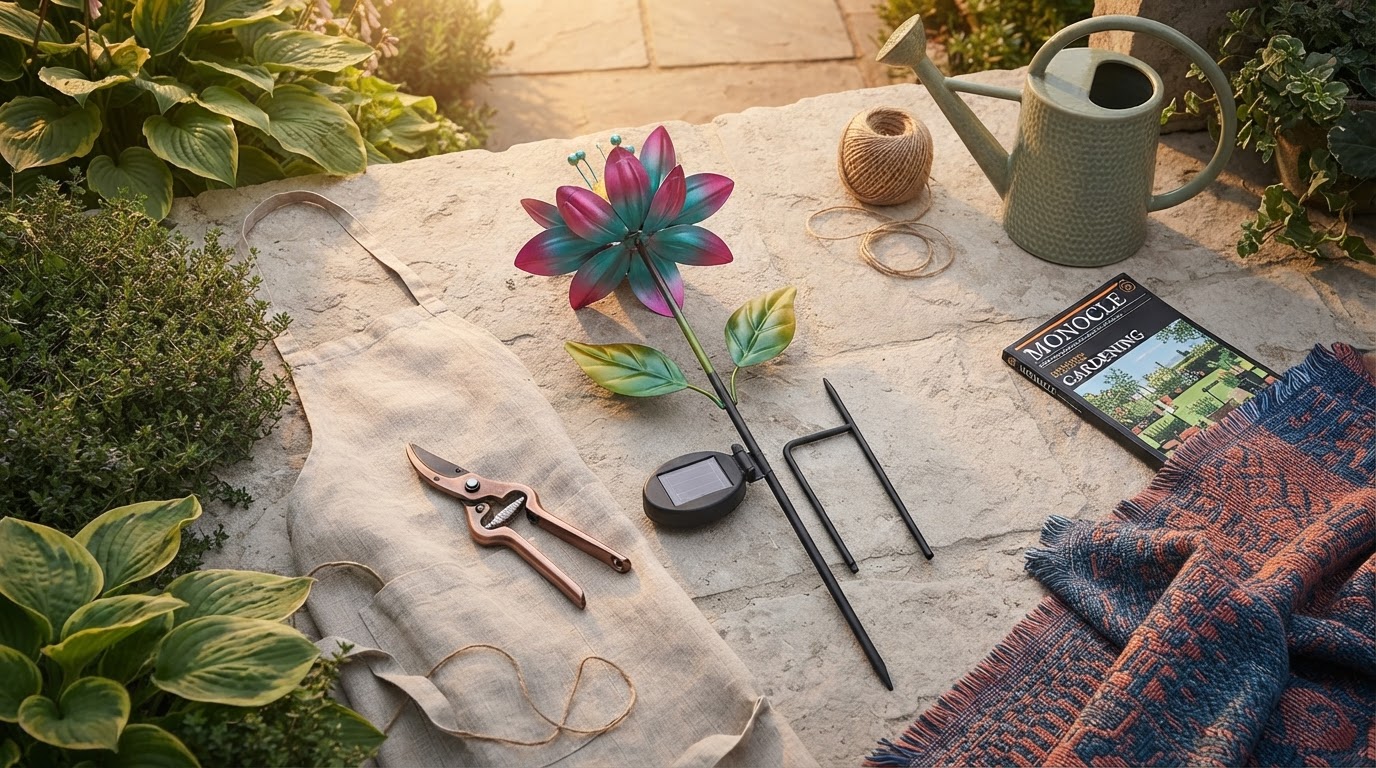
Solar Windmill Stakes for Kinetic Lighting Systems
 Maya ChenContributing Editor
September 16, 2026. This analysis evaluates the integration of Solar Windmill Stakes into residential landscape architectures to address static lighting fatigue. It is written for property owners seeking a functional intersection between renewable energy and structural yard aesthetics.
The Failure of Static Landscape Lighting
The conventional wisdom says that landscape lighting should be invisible, hiding behind shrubs to cast a steady, unchanging glow on architectural features. However, this approach ignores the psychological stagnation of a fixed nighttime environment. Most consumers purchasing decorative solar windmills for garden are not just looking for illumination; they are reacting to the sterile, museum-like quality of traditional LED path lights. According to data collected by the International Dark-Sky Association, the over-reliance on high-intensity, static outdoor lighting contributes significantly to light pollution while failing to provide the visual interest that human eyes naturally seek through movement. Here's the part nobody talks about: static lights often create harsh shadows that decrease perceived safety, whereas a moving light source, such as those found on a decorative solar spinning windmill, breaks up these shadows through constant kinetic shifts. The market is currently seeing a surge in interest for large solar windmill yard art, with Google Search Console data showing over 1,200 impressions for solar windmill garden stakes as homeowners move away from fixed bollards. The problem isn't a lack of light; it's a lack of life. A garden that looks the same at 9:00 PM as it does at midnight fails to engage the observer. By incorporating outdoor solar windmill decor, designers can introduce a temporal element to the landscape, where the speed of the light's rotation reflects the local wind conditions, creating a real-time data visualization of the environment rather than a pre-programmed light show.
Engineering the Solar Windmill Stake
Solar Windmill Stakes solve the dual-problem of power delivery and mechanical wear by utilizing high-efficiency photovoltaic cells integrated directly into the kinetic structure. Unlike traditional solar lights that sit low to the ground and are frequently shaded by growing vegetation, the elevated position of a solar powered windmill for yard applications allows for a clearer line of sight to the sun. Run the math: a stake positioned 36 inches above the ground receives up to 40% more daily solar radiation in partially wooded lots than a 6-inch path light. These units utilize metal windmill garden stake solar lights to ensure structural integrity against high-velocity gusts, a necessary upgrade from the plastic components that dominate the low-end market. The internal circuitry is typically housed within a weather-sealed nacelle, protecting the battery and LED driver from moisture ingress. This design is specifically engineered for the "solar powered kinetic wind spinner" trend, where the movement is not just for show but serves to distribute light across a wider radius than a fixed lens could achieve. By utilizing the rotational energy, these stakes create a flickering effect that mimics natural starlight, which is less disruptive to local nocturnal fauna than a constant beam. Furthermore, the use of metal components in the spinning assembly reduces the friction coefficient, allowing the windmill to activate in wind speeds as low as 3 miles per hour. This ensures that the "kinetic" promise of the device isn't sidelined by calm evening air, maintaining the visual utility of the stake throughout varying weather patterns.
Technical Framework for Landscape Integration
Selecting the correct Solar Windmill Stake requires a departure from purely aesthetic shopping. The effectiveness of a solar powered windmill for yard depends entirely on its placement relative to both solar corridors and wind tunnels created by building structures. When placing outdoor solar windmill decor, one must consider the swing radius of the blades to avoid interference with existing foliage. I'll change my mind about static lighting when it can provide the same level of perimeter awareness that a rotating light source offers through its rhythmic sweeping motion. Before committing to a specific model, consumers should verify the following technical parameters:
- Total height clearance: Ensure the stake stands at least 12 inches above the surrounding ground cover to maximize solar gain.
- Lumen output vs. rotation speed: Confirm the LED intensity is sufficient to remain visible while the blades are at peak RPM.
- Material density: Prioritize powder-coated steel or treated aluminum to prevent oxidation in high-humidity environments.
- Battery capacity: Look for a minimum of 600mAh to ensure the light lasts through the transition from dusk to dawn.
- Bearing type: Sealed ball bearings are preferable over simple bushings to prevent squeaking during high-wind events.
Shop Solar Windmill Stakes here.