Installing Solar Windmill Stakes for Evening Garden Ambience
 Jordan HaleStaff Writer
September 9, 2026. This narrative explores the practical steps for integrating kinetic lighting into residential landscapes through the use of Solar Windmill Stakes. It is intended for homeowners seeking to balance functional illumination with decorative garden art.
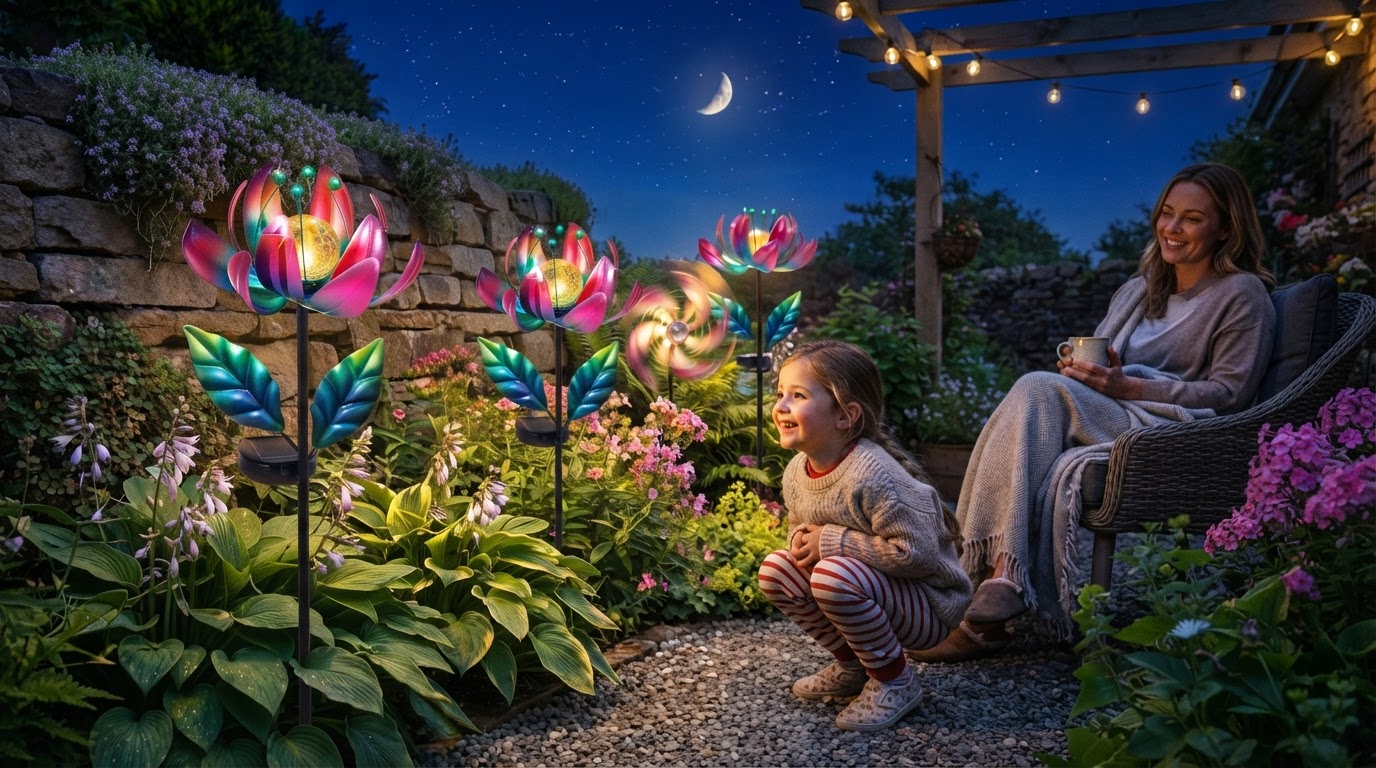
I remember standing on my back porch at dusk, watching the shadows stretch across the lawn. The garden felt static, almost heavy, as the sun dipped below the tree line. The first thing I noticed was how much the space lacked a focal point once the natural light faded. Many homeowners face this exact transition where a vibrant daytime garden becomes a dark, uninviting void at night. According to landscape design principles often discussed by the American Society of Landscape Architects, layering light at different heights is essential for creating depth and safety in outdoor environments. Without a vertical element to bridge the gap between the ground and the canopy, the yard feels disjointed. A light up windmill for yard serves as that missing middle layer, catching the breeze while providing a steady glow that standard path lights simply cannot replicate. The weight of the metal components in my hand felt substantial, a stark contrast to the flimsy plastic stakes I had tried in years past that would lean or snap at the first sign of a thunderstorm. The challenge isn't just finding a light; it is finding a light that moves with the environment rather than fighting against it.

Photo by Artūras Kokorevas on Pexels
It turns out that the placement of these units is as much about physics as it is about aesthetics. When I began positioning my Solar Windmill Stakes, I had to account for both the prevailing wind direction and the solar path. A solar powered kinetic wind spinner requires a specific clearance—usually a three-foot radius—to ensure the blades don't strike nearby foliage or fencing. I found that placing the stake in a slightly elevated corner of the flower bed allowed it to catch the higher-velocity air currents that ground-level plants often block. The internal mechanics are surprisingly quiet; there is a faint, rhythmic whirring that adds a mechanical heartbeat to the garden. Unlike static ornaments, these stakes utilize a dual-bearing system that allows the head to rotate into the wind, maximizing the motion even in light breezes. This movement is what makes a kinetic wind spinner with solar lights so effective at deterring small nocturnal pests while simultaneously acting as a visual anchor. The integration of the solar panel directly onto the central housing ensures that the energy collection doesn't interfere with the rotational balance, a technical detail that prevents the "wobble" common in lower-quality garden art. During the installation, I made sure the soil was damp enough to allow the spiked base to sink deep, providing a rigid foundation that keeps the windmill perfectly vertical.
Somewhere around week two, I realized that the longevity of the display depends entirely on a few critical maintenance steps. To keep the lighting consistent, I developed a simple framework for seasonal care. The decision to keep or move a stake often comes down to the changing sun angles as we move into autumn. I keep coming back to the importance of the LED housing; a quick wipe with a damp cloth every few weeks ensures the solar windmill stake multi color led stays vibrant rather than muted by dust. If you are currently evaluating your own landscape for a new installation, consider this checklist to ensure the best performance:
- Identify a location with at least six hours of direct, unobstructed sunlight to fully charge the internal battery.
- Test the soil density; if the ground is too sandy, consider a small concrete footer or a deeper anchoring pin to prevent leaning.
- Verify the rotational clearance by manually spinning the blades to ensure no contact with branches or walls.
- Check the LED sensor at night to ensure nearby porch lights aren't "fooling" the stake into staying off.
- Inspect the dual-bearing assembly for debris like spider webs or dried sap that can create friction and slow the kinetic motion.
Shop Solar Windmill Stakes here