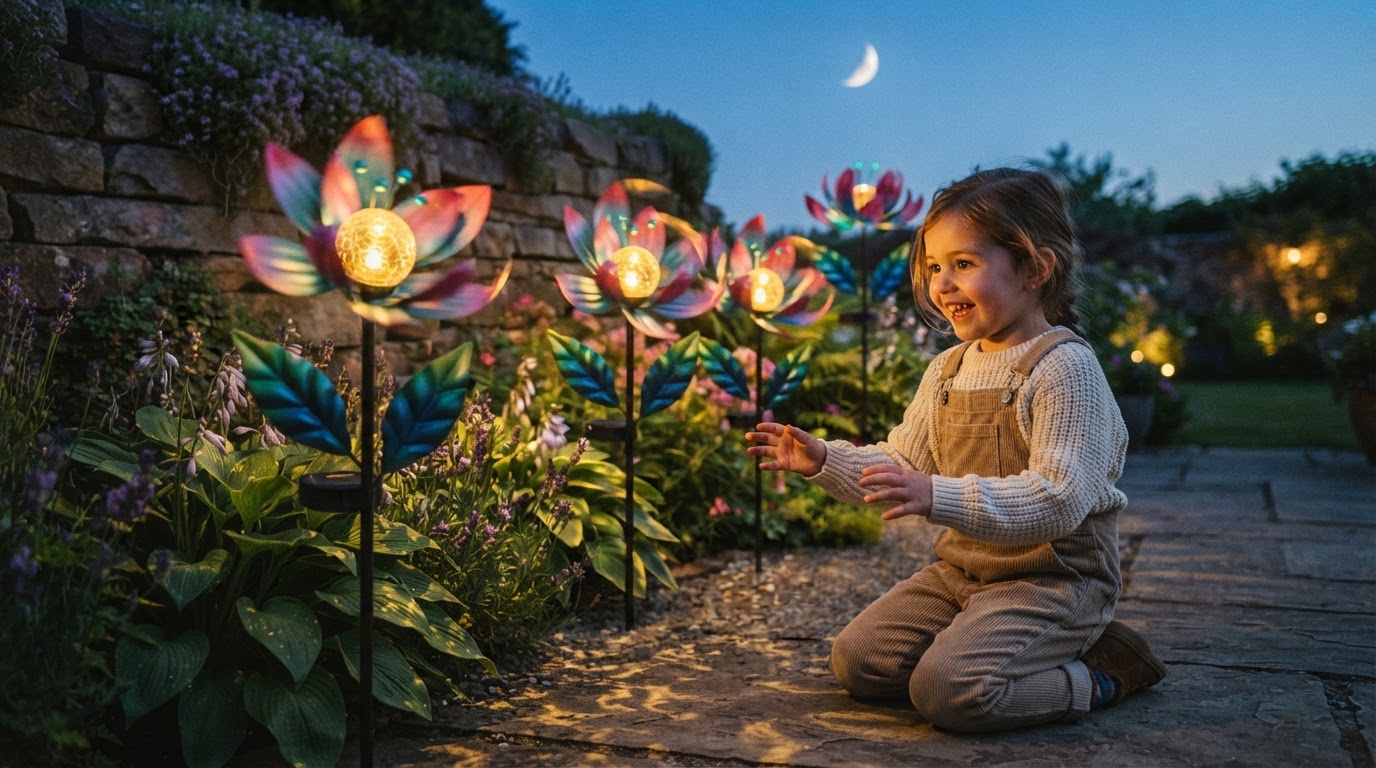
Optimizing Decorative Metal Wind Spinners with Solar Lights
 Maya ChenContributing Editor
October 21, 2026 — The market for outdoor kinetic art is shifting toward integrated illumination, with Solar Windmill Stakes leading a trend that prioritizes visual impact over simple utility. While most consumers treat these as set-and-forget ornaments, the transition from daylight motion to nighttime display requires more than just a gust of wind.
The conventional wisdom says that any open patch of lawn will suffice for these fixtures, but placement is the primary failure point for decorative metal wind spinners with solar lights. According to Tractor Supply Co., many modern styles utilize crackle-glass globes or colored solar orbs to create sparkle along walkways, yet these components require specific positioning to function as intended. If the solar collector is shaded by the very metal blades designed to catch the wind, the internal battery will never reach a full charge cycle. Run the math: a standard Ni-MH battery in these units requires at least six hours of direct, unshaded sunlight to power the LED for the typical eight-hour evening duration.
The Professional Setup Protocol
Maximizing the lifespan and output of Solar Windmill Stakes requires a departure from purely aesthetic placement. The first technical check is the orientation of the solar panel relative to the spinner's rotational axis. Because the metal blades on decorative wind spinners can create a strobe-like shadow effect over the photovoltaic cell, the stake must be positioned so the sun’s peak-intensity path does not intersect with the blade’s shadow. In the northern hemisphere, this means the panel should face south, unobstructed by the kinetic components. Furthermore, the IP rating of the internal housing is often overlooked. While many decorative units are weather-resistant, the pivot points of the metal rotors require periodic lubrication with a dry Teflon spray to prevent friction-based wear that can lead to structural failure. When these stakes are used for simplifying garden setup with solar windmill stakes, users often forget that the weight of the metal blades influences the torque required to start rotation; a poorly balanced spinner will remain static in light breezes, effectively becoming a stationary lamp rather than a kinetic sculpture. Properly installed solar windmill stakes should maintain a vertical plumb line within 1 degree to ensure the center of gravity remains over the stake, preventing the common lean that plagues heavier metal designs.
Expert tip: Here's the part nobody talks about: the glass orbs in these spinners act as lenses. If you live in a high-heat region, ensure the focal point of the glass does not rest on the plastic housing of the LED or the solar cell, as this can cause localized heat damage over time.
Integrating solar powered wind spinners into a landscape design requires more than just sticking a pole in the ground. I'll change my mind about the durability of these units when manufacturers move away from thin-gauge sheet metal to more robust, balanced alloys that don't require constant recalibration. For now, precision in the initial installation remains the only way to ensure these decorative pieces provide a reliable return on investment. The effectiveness of Solar Windmill Stakes is entirely dependent on the user's willingness to prioritize physics over simple curb appeal.
Sources