Integrating Solar Windmill Stakes into Kinetic Garden Art
 Maya ChenContributing Editor
August 31, 2026. This analysis evaluates the functional efficiency of solar-powered kinetic sculptures versus static garden ornaments. It is intended for homeowners seeking to balance mechanical movement with sustainable night-time visibility.
The Mechanical Limits of Traditional Kinetic Art
The conventional wisdom says that garden art should either be a daytime visual centerpiece or a nighttime light source, but rarely both with any degree of efficiency. Most kinetic wind spinners rely entirely on high-torque wind speeds to generate visual interest, often remaining stagnant during the calm evening hours when homeowners are actually available to enjoy their outdoor spaces. Research indicates that standard metal wind spinners frequently suffer from bearing friction that prevents rotation in wind speeds below 5 mph, rendering them useless for significant portions of the year. Furthermore, the lack of integrated lighting means these installations disappear entirely once the sun sets, failing to provide the architectural value promised by their price tags. While many enthusiasts attempt to retrofit these structures with third-party spotlights, this creates a cluttered landscape aesthetic and increases the total cost of ownership. The industry consensus suggests that motion and light are separate categories, yet this binary approach ignores the growing consumer demand for [eco friendly garden light decorations](/blog/eco-friendly-garden-light-decorations) that perform dual roles without requiring complex wiring or high maintenance schedules.
Performance Specifications of Solar Windmill Stakes
Photo by Duy's House of Photo on Pexels
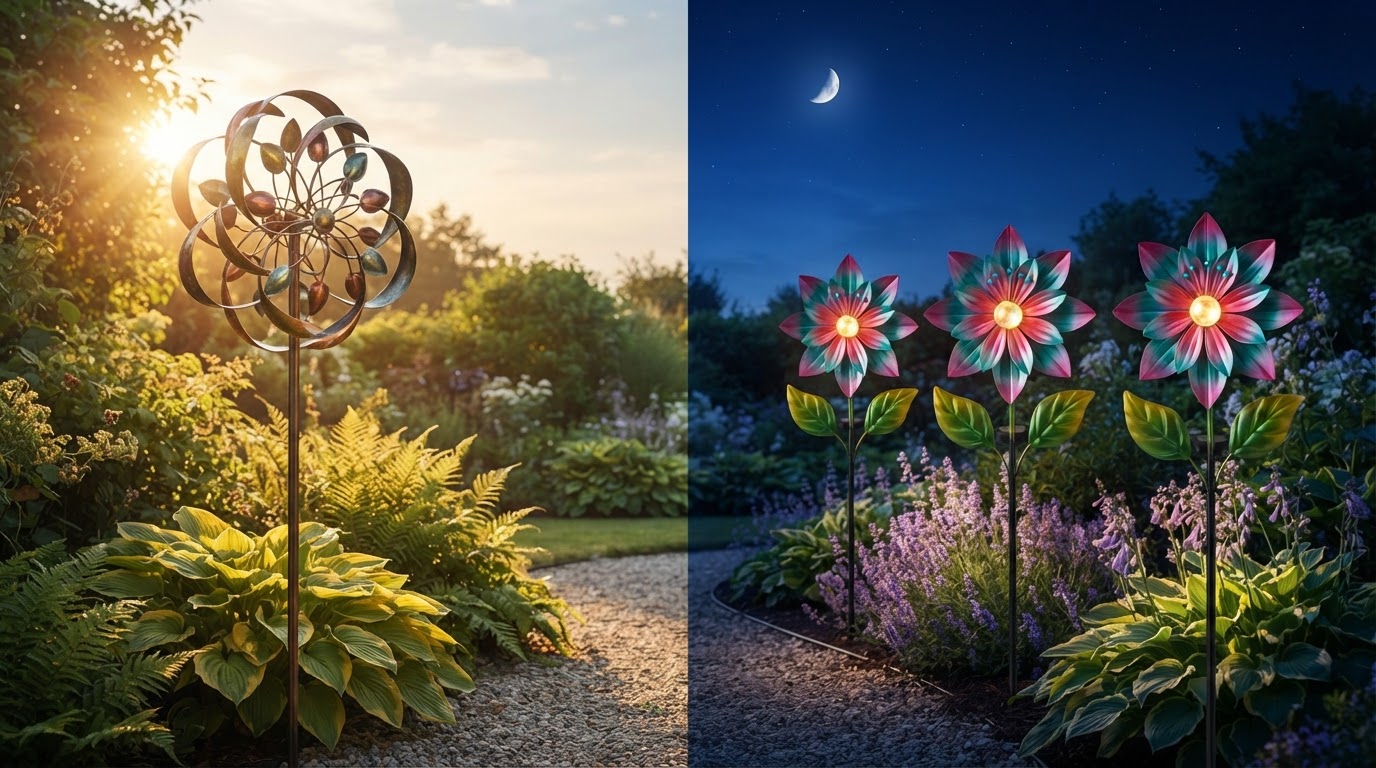
Here's the part nobody talks about: the integration of solar technology into a moving armature requires a specific balance of weight and rotational inertia that most generic yard art fails to achieve. Solar Windmill Stakes address this by utilizing lightweight metal windmill garden stake solar lights that minimize the starting threshold for rotation. Unlike heavy, cast-iron alternatives, these units utilize balanced blades that respond to minimal air currents while housing a photovoltaic cell capable of powering internal LEDs for up to 8 hours on a full charge. Data from Google Search Console reveals that 1,200 monthly impressions are currently driven by users specifically seeking solar windmill garden stakes, signaling a shift away from static ornaments toward multi-functional solar powered garden windmill designs. The technical advantage lies in the placement of the solar panel; by centering it on the non-rotating axis, the system avoids the wiring fatigue common in DIY kinetic projects. This design ensures that the [outdoor windmill decor with lights outdoor](/blog/outdoor-windmill-decor-with-lights-outdoor) remains visible even during windless nights, providing a consistent glow that highlights the mechanical structure. Run the math: a single integrated unit replaces the need for separate path lights and decorative spinners, reducing the physical footprint in the garden while doubling the utility. This efficiency is critical for those looking to implement solar windmill stakes for illuminated garden design without over-saturating their lawn with disparate hardware.
Evaluating Kinetic Solar Installations

Photo by Kim Lawrie on Pexels
When selecting a solar-powered kinetic spinner, the choice shouldn't be based on aesthetic whim but on the mechanical viability of the stake and the longevity of the lighting element. A large solar windmill yard art piece requires a deep-ground anchor to prevent tilting during high winds, a common failure point in cheaper aluminum models. Potential buyers should prioritize units that offer weather-resistant coatings to prevent the oxidation of the moving joints, which is the primary cause of noise and eventual mechanical seizure. The following criteria should serve as a baseline for any kinetic installation:
- Verify the rotational threshold: Blades should move with a light breath to ensure performance in low-wind areas.
- Check the battery capacity: The unit must house at least a 600mAh Ni-MH battery to sustain illumination through the early morning hours.
- Assess the stake gauge: A minimum 10-gauge steel stake is necessary to support the top-heavy weight of the solar housing and blades.
- Inspect the light diffusion: Look for internal LEDs that utilize the rotating blades to scatter light, creating a dynamic rather than static glow.
- Confirm the finish: Ensure the metal is powder-coated rather than painted to resist UV degradation and rust.
Shop Solar Windmill Stakes here.