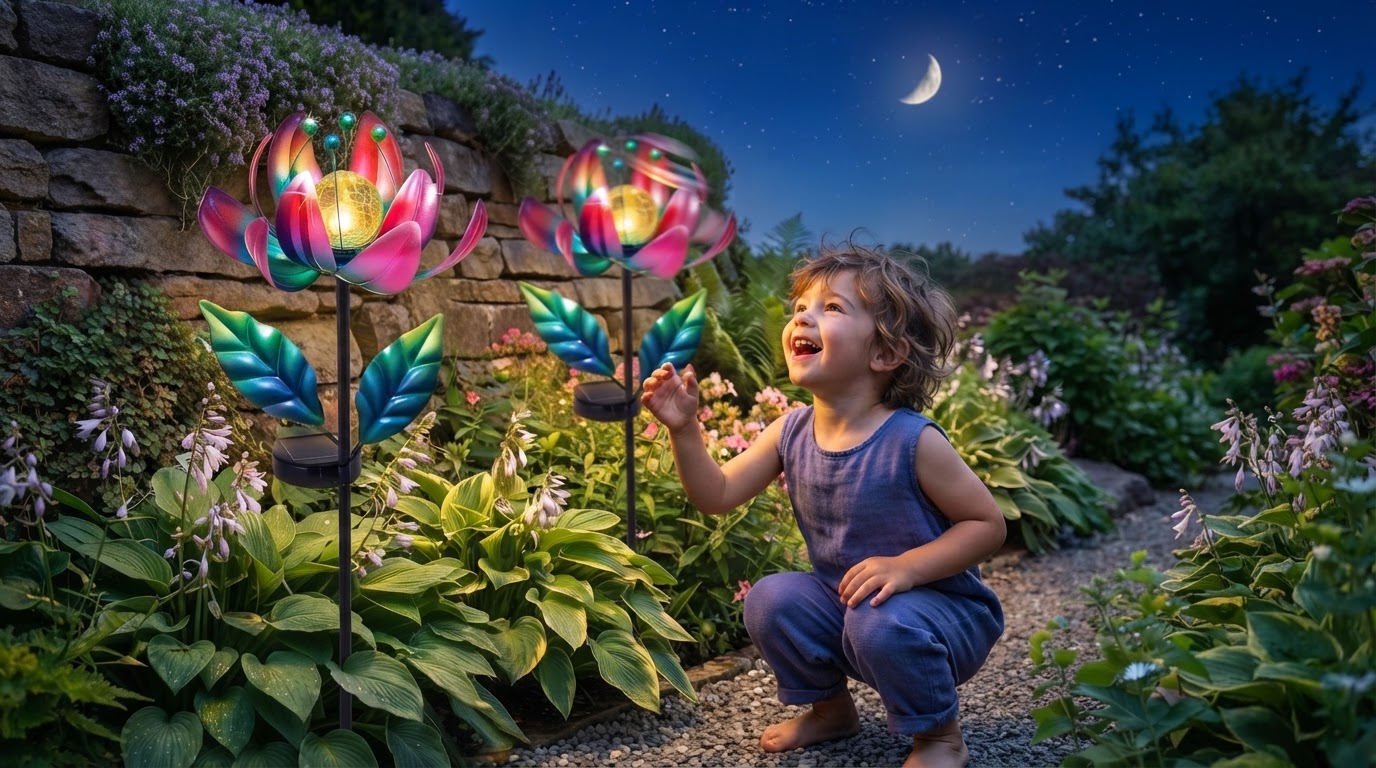
Optimizing Yard Placement for Solar Windmill Stakes
 Priya RamanSenior Analyst
September 18, 2026. Effective yard design requires a balance between mechanical kinetic energy and photovoltaic efficiency. This analysis provides a framework for homeowners to integrate Solar Windmill Stakes into their outdoor environments to maximize both aesthetic movement and nighttime illumination.
The Challenge of Kinetic Energy in Residential Landscapes
Homeowners often face a conflict between static decorative elements and the desire for dynamic, renewable energy features. Traditional garden ornaments remain stationary, failing to capture the ambient energy of wind or the regenerative potential of the sun. The difficulty lies in the "shadow-wind paradox": areas with the highest wind speeds for kinetic movement are often those with the least consistent solar exposure due to structural barriers or dense foliage. According to a comparison by the YouTube channel $100 Solar Panel vs $100 Wind Turbine in a Normal Backyard, balancing these two energy sources requires a specific understanding of how micro-climates within a yard affect performance. While large-scale turbines focus on raw wattage, residential yard art must prioritize the visual rhythm of a decorative solar spinning windmill without sacrificing the battery charge needed for LED components.
Think of it as a matrix of visibility and utility. On one axis, we have the wind vector—the direction and consistency of airflow through the property. On the other axis, we have the solar irradiance—the hours of direct sunlight hitting the photovoltaic cells. When these two axes are misaligned, a windmill may spin beautifully during the day but fail to illuminate at night, or it may glow brightly while remaining entirely static. Identifying the "sweet spot" where these vectors intersect is the primary challenge of decorative solar windmills for garden installations. Without this strategic placement, the hardware becomes a static metal pole rather than a functioning piece of kinetic art. Once you see it this way, the placement of a stake becomes a calculation of environmental geometry rather than a simple aesthetic choice.
Integrating Solar Windmill Stakes into Modern Design
Solar Windmill Stakes resolve the tension between lighting and movement by utilizing a dual-purpose architecture. These units feature metal windmill garden stake solar lights that harvest energy via integrated panels to power RGB transform lighting and LED modules. Unlike industrial turbines sold by specialists like Solar Us Shop, which focus on 1500W power generation, these stakes are engineered for visual impact and localized illumination. The design typically incorporates flower-shaped blades or geometric fins that respond to low-velocity wind, ensuring that the kinetic element remains active even in protected suburban yards.
The technical integration of these stakes relies on a high-capacity internal battery that bridges the gap between peak sun and peak viewing hours. As noted in the Solar Windmill Stakes Performance Review, the efficiency of the LED output is directly tied to the positioning of the stake relative to southern exposure. By using a solar powered windmill for yard applications, the homeowner creates a layered lighting effect. This is particularly effective when used as part of Solar Windmill Stakes for Kinetic Lighting Systems, where the rotation of the blades creates shifting shadows and light patterns that static spotlights cannot replicate. The hardware is built for durability, often featuring metal construction to withstand the torque generated by the spinning head, ensuring that the decorative solar spinning windmill remains a long-term fixture in the landscape.
A Decision Rule for Stake Placement and Selection
Selecting the correct location for a solar powered kinetic wind spinner requires a systematic evaluation of the property. The decision rule: prioritize solar access for the base charge, then optimize the wind corridor for kinetic movement. Because the LED components require a minimum threshold of charge to operate through the night, placing the stake in a shaded "wind tunnel" will result in poor lighting performance. Conversely, a sun-drenched corner with no airflow negates the kinetic purpose of the windmill.
To ensure optimal performance, use the following checklist for installation:
- Identify the Solar Prime: Locate an area that receives at least 6 to 8 hours of unobstructed sunlight, avoiding the shadow cast by the house after 2:00 PM.
- Map the Wind Corridors: Observe the yard during a light breeze to identify areas where air flows freely between structures, ensuring the decorative solar windmills for garden have enough torque to spin.
- Verify Ground Stability: Ensure the soil is compacted enough to support the stake during high-wind events, preventing the unit from leaning and misaligning the solar panel.
- Assess Visual Sightlines: Position the stake so that the RGB transform lighting is visible from primary indoor viewing areas or outdoor seating zones.
- Sync with Existing Systems: If using multiple stakes, space them at least five feet apart to prevent wind turbulence from one unit affecting the rotation of another.
Shop Solar Windmill Stakes here