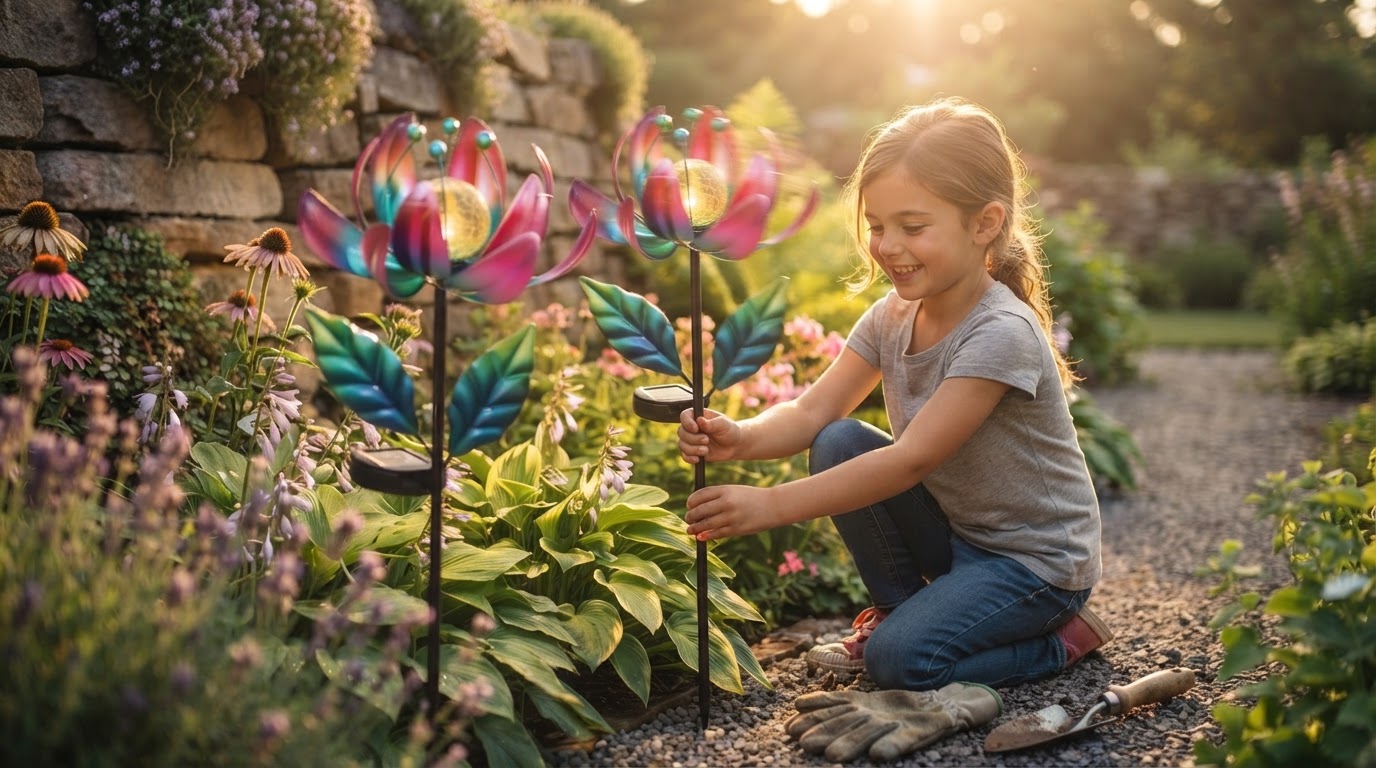
How do I install Solar Windmill Stakes in flower beds?
 Sam VasquezBuying Guide Lead
September 15, 2026 — Solar Windmill Stakes require a minimum of six hours of direct sunlight and placement away from dense foliage to ensure the kinetic blades move freely and the LED lights function overnight.
Homeowners often struggle with balancing the aesthetic placement of garden art against the functional needs of solar-powered components. When you are working within a crowded flower bed, the height of surrounding perennials can easily block the light sensors or tangle in the spinning blades of a light up windmill for yard use.
Where should I position a solar windmill stake for maximum light?
You should position the stake in the southern-most section of the flower bed where it remains clear of shadows cast by the house or overhanging eaves. I have found that placing these units too close to the center of a bed often leads to them being eclipsed by mid-summer growth from taller species like Delphiniums or Foxgloves. If you are working with a smaller space, you might consider how a small solar windmill for flower pots offers more flexibility for relocation as the sun's angle changes throughout the season. Between these two, I’d go with a fixed stake for permanent beds and a pot-based version for seasonal annuals.
Here’s what I’d actually buy: a model with a multi-directional solar panel. Many metal windmill garden stake solar lights feature a fixed panel that requires the entire stake to face south, but adjustable panels allow you to tuck the stake into a corner while still angling the cells toward the sun. Skip this if your flower bed is located on the north side of a two-story building, as no amount of angling will compensate for a total lack of direct ultraviolet exposure.
How do I prevent plants from interfering with kinetic movement?
To prevent interference, maintain a clearance radius of at least 12 inches around the rotating blades of the Solar Windmill Stakes. In my experience, the most common failure point for kinetic yard art isn't the motor or the battery, but rather a stray vine or a tall ornamental grass leaf getting caught in the blade assembly. If you have a dense, lush garden, you should look into tall solar windmill yard art which elevates the kinetic head above the primary growth layer of most flower beds.
If you're on a budget, you can use a simple shepherd's hook to test heights before committing to a permanent stake location. For those managing expansive properties, large solar windmill yard art design principles suggest using these stakes as focal points at the end of sightlines rather than burying them in the middle of a cluster. Proper solar windmill stakes integration involves treating the stake as both a light source and a structural element that needs its own breathing room to spin.
Quick answers
Q: Can the stakes withstand heavy rain in a flower bed? A: Most Solar Windmill Stakes are rated IP44 or higher, meaning they can handle splashes and rain, but they should not be placed in low-lying areas of the bed where water pools for more than 2 hours.
Q: How deep should the stake be pushed into the soil? A: The spiked base should be buried at least 6 to 8 inches deep to prevent the windmill from leaning when the soil becomes saturated or during wind gusts exceeding 20 mph.
Q: Will the LED lights attract pests to my flowers? A: The low-lumen output of solar LEDs typically does not attract the same volume of insects as 120V halogen floodlights, though you may see a slight increase in moth activity within a 3-foot radius of the stake.
Learn more about Solar Windmill Stakes at https://solyrawindmill.com.